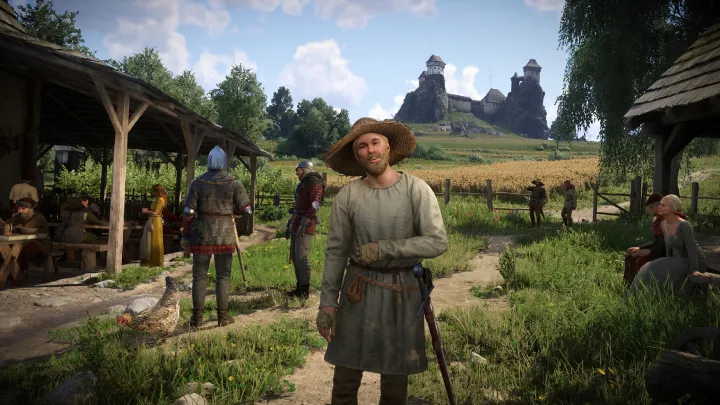






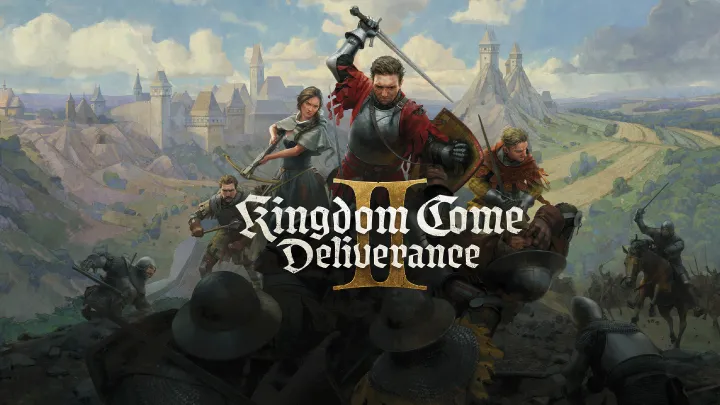
The release of Kingdom Come: Deliverance II marks a transition from a peasant’s desperate struggle for survival to the complex political maneuvering of a man caught between his low-born past and his knightly future. While many RPGs treat character progression as a simple climb up a power ladder, Warhorse Studios has doubled down on the "burden of realism." The game does not merely ask how well you can swing a sword, but how the weight of your coin, the shine of your plate, and the grime on your boots dictate the very fabric of the world’s reaction to you.
This sequel dives deeper into the friction between Henry’s internal identity and the rigid social stratification of 15th-century Bohemia. The central issue that defines the gameplay experience is the Socio-Economic Entrapment System—a mechanic where every choice in gear and hygiene creates a ripple effect in NPC AI, quest branching, and economic viability. It is a game where being "too powerful" or "too rich" becomes its own unique set of obstacles, forcing players to manage their reputation as carefully as their stamina bar.
The Ghost of Skalitz: Carrying the Weight of the Past
Henry begins his journey in the sequel no longer a boy, but he is far from a master of his environment. The game meticulously tracks your origins through the Legacy of Reputation system. If you carry yourself like the blacksmith’s son you once were, the common folk in the bustling city of Kuttenberg will open up to you, sharing rumors and shortcuts that a high-born knight would never hear. However, this familiarity comes at the cost of respect from the city’s elite, who may refuse to grant you audiences or offer you lower-tier rewards for your services.
The struggle here is not just narrative; it is mechanical. Players often find themselves in a "social limbo" where they are too refined for the taverns but too "peasant-like" for the court. This creates a constant tension in the early hours of the game. You must decide whether to shed your humble skin entirely or maintain those roots to keep a finger on the pulse of the underground economy.
The Mechanics of Social Perception
- Aura System: A hidden stat that combines your gear's value, cleanliness, and your recent deeds.
- Dialogue Locking: High "Noble Aura" prevents "Peasant Speech" options, effectively locking you out of low-level street intelligence.
The High Cost of Steel: The Paradox of Late-Game Armor
As Henry acquires full plate armor, the game shifts from a survival horror experience to a simulation of medieval logistics. In Kingdom Come II, armor is not just a stat block; it is a social and physical liability. Walking into a quiet village wearing a full harness of Milanese plate causes the "Intimidation Factor" to skyrocket. While this might help in a brawl, it effectively kills your ability to perform investigative tasks.
The economic drain of maintaining high-end gear is the specific issue that many players find daunting. Unlike other RPGs where gear stays pristine, here, a single skirmish can result in repair costs that exceed the bounty of the quest itself. This forces a deep level of tactical planning: do you wear your best gear and risk bankruptcy, or do you travel in gambesons and risk a quick death?
Maintenance Tiers
- Field Repairs: Using a whetstone or kit to maintain 50-70% integrity.
- Master Smithing: Expensive, time-consuming, but necessary for social standing.
Kuttenberg’s Labyrinth: Urban Density and Navigation
The transition from the sprawling forests of the first game to the dense, multi-layered city of Kuttenberg introduces a new layer of complexity. The city is not just a hub; it is a character with its own laws and "Zone-Based Aggro." Navigating the narrow alleys requires a different mindset. In the woods, you are a hunter; in the city, you are a subject.
The issue here is the Congestion Mechanic. Moving through crowds while heavily armed slows Henry down and can lead to "Accidental Battery" charges if you shove the wrong burgher. This realism enforces a slower pace of play that challenges the "sprint-everywhere" mentality of modern gamers. You are forced to observe the flow of the city, learning the patrol routes of the guard and the closing times of the gates.
The Chemistry of Blood and Mud: Hygiene as a Hard Stat
Hygiene returns in the sequel with significantly more teeth. In the first game, being dirty was a minor charisma debuff; in Kingdom Come II, it is a health and social hazard. Blood left on your sword or clothes for too long will dry and become harder to wash off, and "Gore Stains" are now a specific crime in certain religious districts of the city.
The Impact of Filth
- Infection Risk: Open wounds have a higher chance of festering if your clothes are "Filthy."
- Merchant Haggling: Prices can swing by up to 30% based solely on your cleanliness.
- Stealth Penalties: Dried mud on boots makes more noise on wooden floors than clean leather.
This level of detail turns every puddle and every rainstorm into a tactical consideration. You find yourself seeking out bathhouses not for the "service," but as a mechanical necessity to remain viable in the game's social circles.
The Sword vs. The Tongue: Combat Rebalanced
Combat in Kingdom Come II has evolved to be more visceral, yet more punishing. The "Master Strike" system has been tweaked to prevent the "wait-for-parry" meta that dominated the first game. Now, aggression is rewarded, but only if it is calculated. The introduction of early firearms adds a chaotic element—they are slow, unreliable, but terrifyingly effective at close range.
Tactical Considerations in Melee
- Directional Weakness: Enemies now actively target the gaps in your specific armor set (e.g., if you lack a gorget, they will aim for the throat).
- Stamina as Breath: Heavy helmets restrict your field of vision and drain stamina faster due to "Restricted Breathing" mechanics.
The Religious Schism: Navigating the Hussite Pre-War
The narrative issue at the heart of the game is the rising religious tension. Henry is often forced to choose between the established Church and the reformist Hussite movement. This isn't just a dialogue choice; it affects which merchants will trade with you and which parts of the map are safe to travel.
If you align with the reformers, you gain access to cheaper supplies and "Volunteers" who can assist in large-scale skirmishes. However, you become a pariah in the eyes of the nobility, making the "Main Quest" significantly harder as you lack the political backing of the Lords. This creates a "choose your difficulty" system that is baked directly into the story's themes.
The Alchemical Grind: The Science of Preparation
Alchemy in Kingdom Come II remains a manual, first-person process, but with added variables like "Heat Consistency" and "Distillation Purity." For players who want to succeed in the game’s difficult combat encounters, alchemy is not optional—it is a lifeline.
The issue is the time investment. Brewing a single "Lazarus Potion" can take several minutes of real-time effort. This creates a "Pre-Flight Checklist" feeling before every mission. You don't just "go on a quest"; you spend a day in-game gathering herbs, brewing oils for your blade, and ensuring your armor is strapped correctly.
Law and Order: The Complex Crime System
The crime system in Kingdom Come II has been overhauled to include Witness Credibility. In the first game, guards often seemed omniscient. In the sequel, if you commit a crime, the AI calculates who saw you, their social standing, and how fast they can reach a guard.
- The Silent Kill: If no one finds the body, no crime is reported.
- The Frame-Job: You can plant stolen goods on NPCs to divert the guards' attention.
- Bribes and Influence: Your reputation with the local Bailiff determines if you can "talk your way out" of a hanging.
The Art of the Siege: Large-Scale Warfare
The game culminates in massive siege battles that test the limits of the engine and the player's patience. Unlike the scripted feel of the first game’s battles, these sieges are dynamic. You are often tasked with "Battlefield Engineering"—setting up ladders, protecting sappers, or using the new crossbow mechanics to clear the battlements.
The issue here is performance and chaos. The sheer number of NPCs can be overwhelming, and the "Combat Lock" system struggles when you are surrounded by ten enemies. Success in these sections requires letting go of the 1v1 dueling mindset and adopting a "Soldier’s Instinct," focusing on positioning and survival over flashy combos.
Conclusion: The Uncompromising Vision of Warhorse
Kingdom Come: Deliverance II is a game that respects the player’s intelligence by refusing to simplify the realities of the past. The central issue of socio-economic friction—where your clothes, your smell, and your coin speak louder than your actions—creates an immersive loop that few other RPGs can match. It is a grueling, often frustrating experience that demands total engagement.
By forcing Henry to live with the consequences of his physical state, Warhorse Studios has moved beyond the "Hero’s Journey" and into a "Survivor’s Reality." Whether you are scrubbing blood off a stolen gambeson or debating theology in a candlelit cathedral, every moment in Kingdom Come II feels earned. It is a masterpiece of historical fiction that proves that sometimes, the greatest obstacle in a game isn't a dragon or a demon, but the rigid social order of the world itself.